Budgeting a yard project across seasons and years
This page covers how to spread a yard budget across seasons and years, so a patio, a wall or a lawn does not stall halfway. It is about the timing of the money, not about why one quote differs from another, which is covered on the cost guide.
A yard budget is a timeline before it is a number
For most readers the biggest risk is not the total. It is the middle: the first phase is paid for, the second is waiting on a calendar and a bank balance, and the work sits half done through a winter. This page is for a reader who wants to split one plan across seasons and years without that gap.
A yard job that has to be paid for in one go is usually a job that stops halfway.
The figures to know before you sign anything
I have listed only the figures I could tie to a named source. Two rows are about contract rules and one is a national price range. That range is a baseline for comparing bids, not a Massachusetts price.
| Figure | What it means for a budget | Period | Source |
|---|---|---|---|
| $27.38 to $36.95 per square foot | A national starting range for installing a bluestone patio. Local labour, access and drainage work move it. | May 2026, national average | Homewyse, cost to install a bluestone patio |
| Over $1,000 | Above this amount, the Massachusetts residential contract rules apply to a residential contracting agreement. | Statute as published, no date given | General Laws, chapter 142A, section 2 |
| One third of the contract price | The most an advance deposit may be, or the cost of special-order materials if that is greater. | Statute as published, no date given | General Laws, chapter 142A, section 2 |
| Three days | The owner’s cancellation right, which the contract must state. | Statute as published, no date given | General Laws, chapter 142A, section 2 |
Whether a landscaping or hardscape job counts as residential contracting under that statute is not settled by these sources. Treat the contract rules as the ones to check against the contractor’s paperwork, and ask the local building department if the answer matters for your job.
Phasing the work in the order the money can carry it
Work the plan in this order. Each step gives the next one a fixed point to rest on.
- Write the whole job on one page and mark which parts depend on which. A patio’s base has to be right before its surface is worth paying for.
- Settle the base and the drainage first, because they decide what the rest costs. The order of that work is on the planning page.
- Put a seasonal job into the first phase only if the calendar allows it. Seeding, tree and shrub moves and pruning each have their own window, set out on the seasonal projects page.
- Decide a contingency sum before the first deposit, not after the first surprise. Pick the figure yourself and write it down. Do not borrow a percentage from anywhere.
- Check the contract before you pay a deposit. Keep the figures from the table above in front of you while you read it.
- Write phase two into the plan with a date you can change, so the gap between phases is planned rather than a stall.
Keeping the money spread out over the years
A budget that runs across years needs a record of what was paid, what is still owed and what is waiting. A simple sheet with one row per phase, and a column for the date you expect to pay, does most of the work.
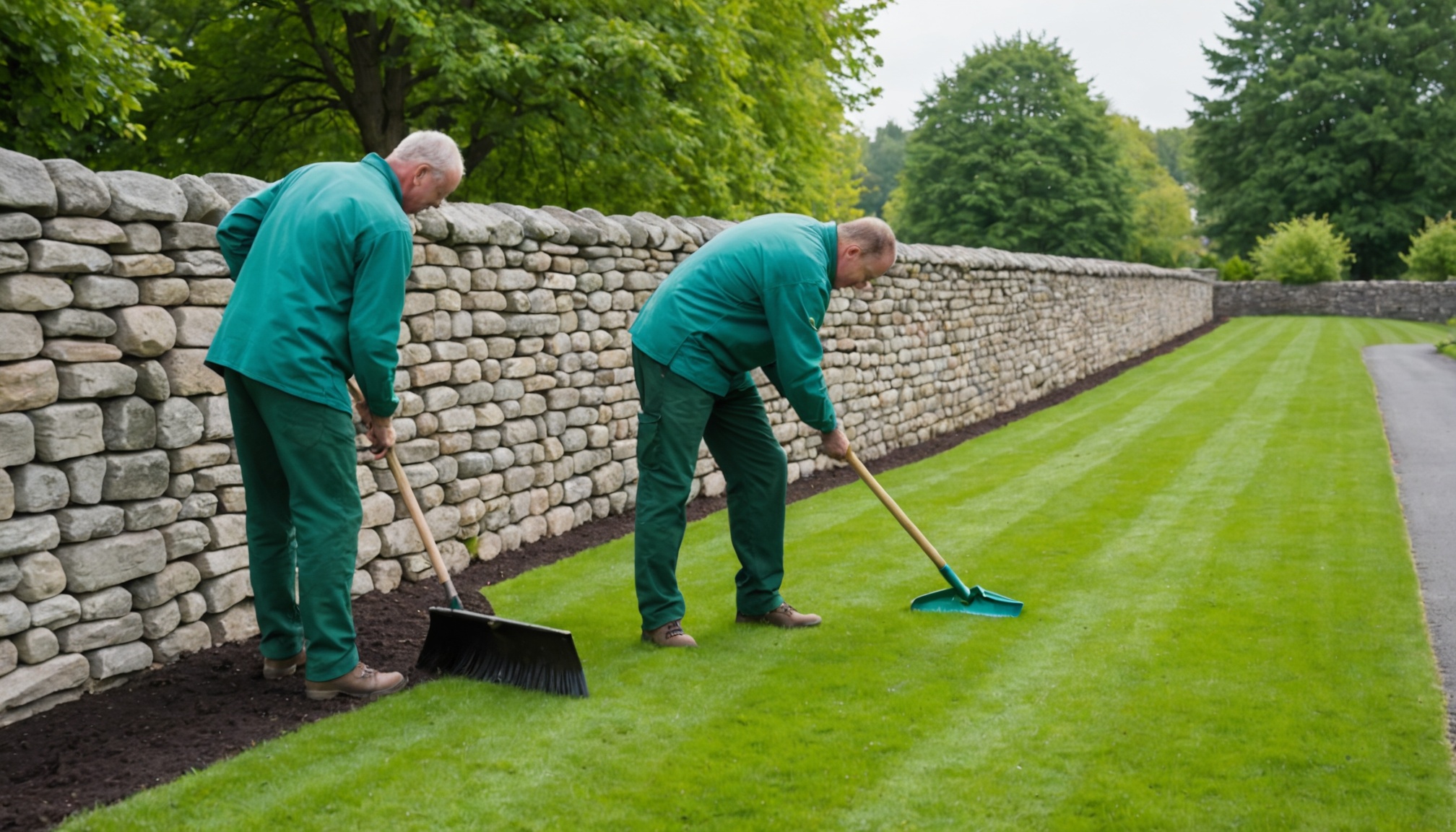
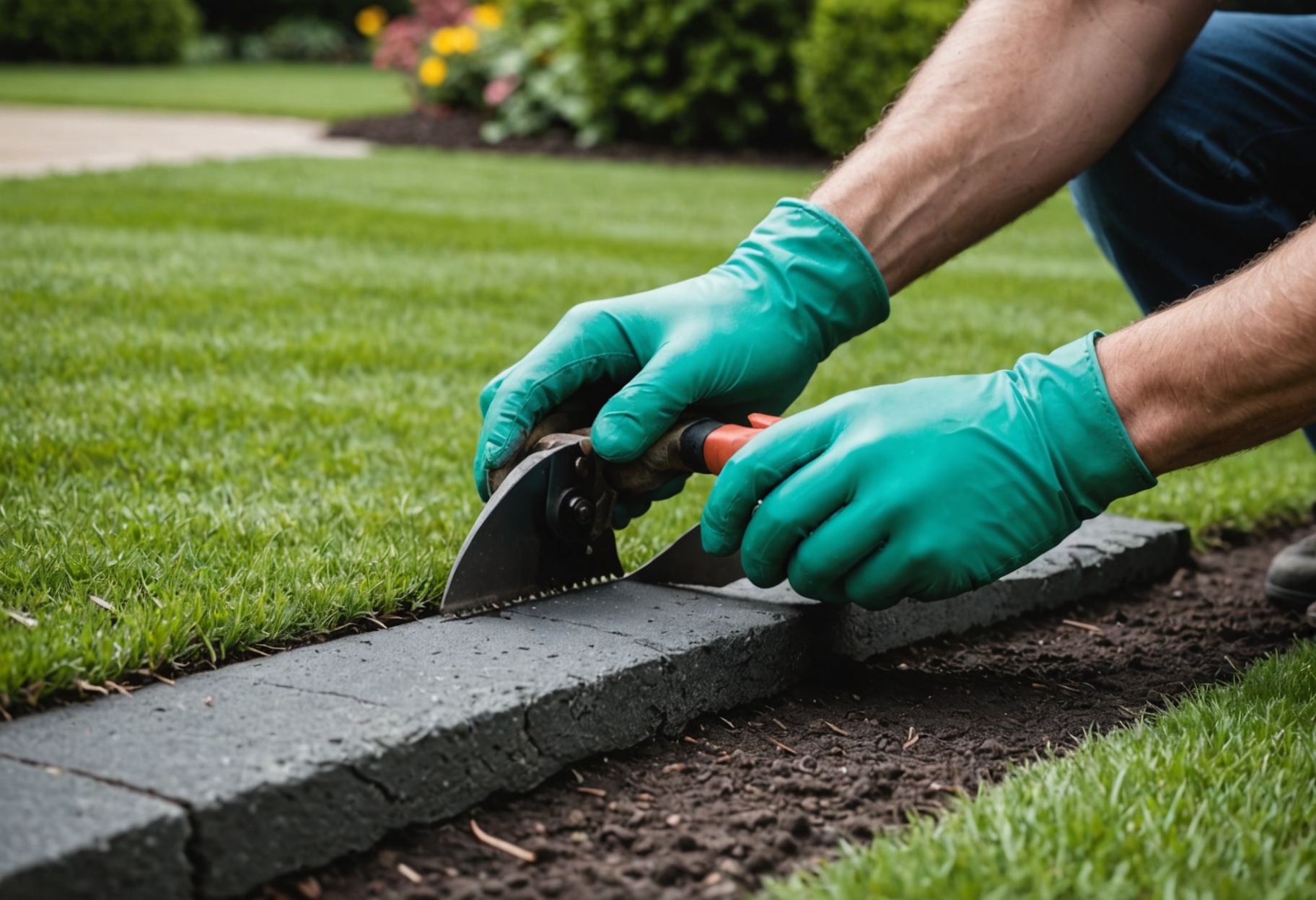
Edging, shown in the picture, is a task that comes back through the season. It belongs in a yearly line of the plan rather than in the cost of the build. Which tasks repeat, and which ones a first-time owner can learn safely, is on the skill guides page.
Where to go once the numbers are on a sheet
Once the phases are on a sheet, read the cost guide to see why two quotes for the same phase can differ, and the questions to put to anyone before you hire them. Then read the planning page for the order the phases should follow.
If the work is still a question, the beginners guide walks through observing your own yard before you commit to any phase. The safety page covers the jobs where stopping and calling someone is the right call.